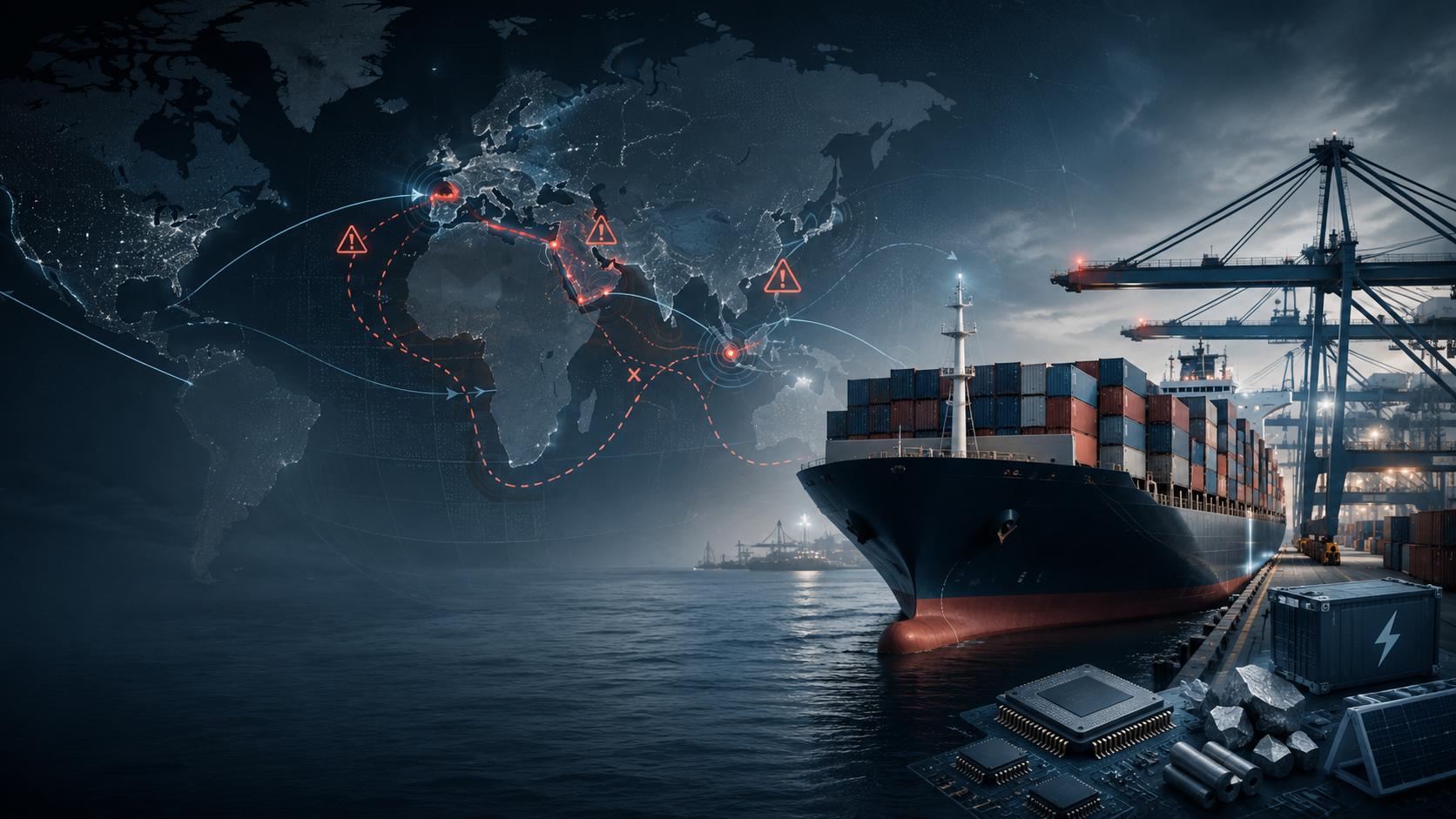
I have been doing this for a while now, and speaking to every size business going, the world’s gone a bit mad.
For decades, the script in our profession was comfortable and entirely predictable: a razor-sharp focus on optimising logistics, streamlining processes, and slashing upfront costs. But recently, the tone in both our classrooms and corporate boardrooms has shifted dramatically. The reality we are all waking up to is a chilling one: the weaponisation of supply chains.
To understand how we got here, we only have to look at the staggering geopolitical activity of the last five years. We have lived through a breathless sequence of shocks that have completely rewired the globe. From the lingering aftershocks of a pandemic to the outbreak of major European conflict, we watched traditional trade routes fracture. Then came the prolonged maritime crisis in the Red Sea, forcing ships around the Cape of Good Hope, closely followed by intense shocks in the Middle East and severe curbs on critical mineral exports.
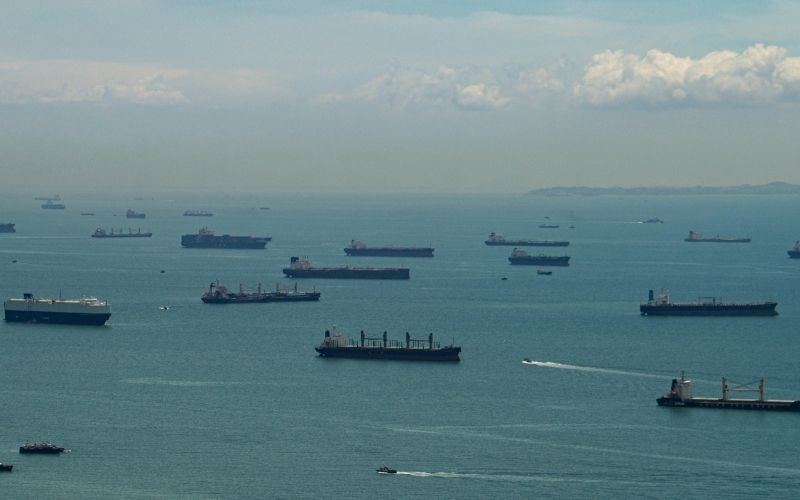
And, of course, dominating every boardroom conversation right now is the massive volatility of the Trump administration’s aggressive tariff regimes. Between sweeping cross-border import penalties and targeted national security tariffs hitting everything from raw steel and aluminium to advanced semiconductors and pharmaceuticals, average tariff rates have spiked to levels we haven’t seen since the mid-20th century. It has pushed hundreds of billions of pounds in trade completely out of traditional corridors, forcing businesses into a frantic, chaotic game of pull-forward logistics and forced supplier migration.
Now, as most of you who know me will attest, I have an unwavering, deep-rooted love for Preston. If it were up to me, I’d never leave the North West, and I’d source absolutely everything from within a five-mile radius of Deepdale. Unfortunately, the realities of modern Industry 4.0 mean we have to start looking a little further afield than Lancashire to shore up our operations.
When nation-states restrict rare earth elements, when shipping choke points become tactical leverage points, and when targeted tax policies are deployed as geopolitical leverage, supply chains cease to be commercial channels. They become ammunition.
This isn’t just my view from the training room. As the Interos Supply Chain Risk Report recently noted:
“Supply chain risk is now a board-level imperative… Many of the Fortune 5000 globally are not paying enough attention to the weaponisation of global supply chains… This era of uncertainty is in fact global.”
Global networks have shifted permanently from simple logistics to complex instruments of geopolitical strategy.
How Teams Must Adapt
If supply chains have been weaponised, then our teams cannot simply be trained as administrative buyers. We have to adapt our capabilities immediately across three critical fronts:
01
Embracing Regenerative Procurement & The Circular Economy
The old model was entirely extractive—we took raw materials from one side of the world, manufactured them elsewhere, and disposed of the waste. In a weaponised market, that linear vulnerability is a massive liability. We have to pivot toward a circular economy, designing supply networks where materials are perpetually recovered, repurposed, and kept in use.
This requires a fundamental shift to regenerative procurement. We are no longer just buying widgets; we are building sourcing strategies that restore and protect our resource bases so they can’t be withheld by a geopolitical rival.
02
Building Hyper-Local Loops
If global transit corridors are compromised by tariffs and maritime chokepoints, the ultimate defence is proximity. Tomorrow’s leaders will win by establishing hyper-local loops—folding supply chains in half and anchoring production and recovery networks closer to home. It’s about building micro-networks that can operate autonomously when macro-networks fracture. (And yes, this means my dream of sourcing closer to Preston might actually become sound global strategy!)
As a G7 policy paper on economic security highlighted:
“Market mechanisms, driven primarily by cost considerations, have contributed to excessive concentration and systemic risk. By integrating criteria such as transparency, diversification, sustainability, trustworthiness, and security… countries can actively steer markets.”
03
Rewriting the Talent Curriculum
The traditional, transactional training model, the one line managers tell me hasn’t changed in 20 years, is entirely defenceless against a weaponised market. Teaching a student how to simply execute a standard RFP is like giving them a wooden shield in a modern technological conflict.
Our clients are often amazed by how different our provision feels compared to traditional providers. The reason is simple: we stepped away from the legacy textbook years ago. We train professionals to be “designers of the future” who can handle advanced data, build resilient circular networks, negotiate on value rather than just price, and defend their strategic reasoning under immense pressure.
Stepping Into the Situation Room
We are witnessing a massive structural evolution. Procurement is moving rapidly out of the quiet back office and straight into the corporate situation room. The calling is higher, the exposure is greater, and the boardroom is finally looking to us for answers.
Ultimately, this responsibility falls squarely on the shoulders of the procurement and supply chain professionals of the future. The landscape has changed permanently, and we cannot afford to wait for passive, top-down guidance to catch up with reality. Practitioners on the ground must step up, claim their agency, and implement these circular, hyper-local, and data-driven changes today.
When you look at your current supply lines, do you see standard commercial partnerships, or do you see geopolitical vulnerabilities? How is your team adapting to the weaponisation of your networks?
This article was written by Greg Jackson, Director of Education at SRSCC Ltd.