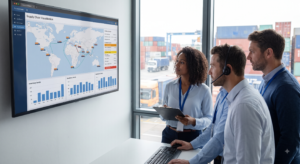
Artificial Intelligence (AI) is transforming the way businesses operate, and procurement and supply chain management are no exception. As organisations strive to remain competitive in an increasingly dynamic and unpredictable global landscape, the adoption of AI offers an unparalleled opportunity to enhance agility, efficiency, and resilience across procurement functions.
The ability to automate tasks, unlock deep insights from data, and proactively manage risks is revolutionising traditional procurement and supply operations. AI is no longer a futuristic concept; it’s a practical, powerful tool that enables smarter decision-making and drives measurable results.
Automating Procurement Processes with AI
One of the most impactful applications of AI is in automating core processes. Tasks such as sourcing, supplier selection, contract lifecycle management, and vendor relationship activities can be streamlined with AI-driven tools. For example, intelligent systems can validate purchase orders, flag anomalies, and reduce errors in data processing, significantly improving speed and accuracy across routine tasks.
Driving Cost Optimisation and Spend Analytics
AI is also reshaping how organisations approach spend analytics and cost optimisation. With the ability to identify patterns and trends in vast datasets, AI enables procurement teams to analyse spend more effectively, uncover hidden cost-saving opportunities, and forecast demand with greater precision. Predictive analytics also supports better inventory management, ensuring supply matches demand while reducing excess and waste.


Enhancing Supplier Management and Risk Mitigation
When it comes to supplier selection and management, AI-powered platforms provide a more sophisticated and data-driven approach. From initial profiling and qualification to ongoing performance evaluation and risk scoring, AI can track key metrics such as delivery reliability, pricing trends, product quality, and even alignment with sustainability goals. This enables organisations to make informed decisions and build more strategic supplier relationships.
In today’s volatile market, effective risk management is essential, and AI can proactively identify emerging threats. By monitoring supplier data, market conditions, geopolitical developments, and regulatory changes, AI systems offer early warnings and help mitigate potential disruptions. AI is also being used to detect and prevent procurement fraud, flagging suspicious activity before it becomes a costly issue.
Smarter Contract Management and Scenario Planning
Contract management is another area benefitting from AI. Intelligent tools can quickly scan and review contracts to extract key clauses, terms, and obligations. This not only speeds up the legal review process but also improves compliance checks, ensuring that contracts meet regulatory requirements and organisational standards.
AI’s capability to deliver predictive insights is critical when managing disruption. Whether it’s natural disasters, global supply chain shocks, or political instability, AI can assess data patterns, run scenario modelling, and support proactive planning. These tools help procurement teams prepare for “what if” situations and respond faster when disruption strikes.


Challenges to Consider and Best Practices
The benefits of AI adoption are significant. Organisations see improved operational efficiency by automating repetitive tasks, enhanced decision-making through real-time insights, and substantial cost savings from better supplier negotiations and optimised stock levels. Perhaps most importantly, AI enables greater resilience, equipping supply chains to withstand disruption and recover more effectively.
However, implementing AI is not without its challenges. Resistance to change within organisations can slow adoption. Legal and regulatory complexities, particularly in public procurement, must be carefully managed. There is also the need to ensure data accuracy and find ways to analyse unstructured data, a common limitation of many traditional systems.
To adopt AI successfully, organisations should follow a set of best practices. First, strategic planning is key; clearly define the goals and outcomes of introducing AI into procurement. Data integration must be prioritised to ensure that AI tools can connect with existing systems and generate meaningful insights. Training and upskilling are vital, procurement teams need to understand how to work with AI tools, interpret the data they provide, and apply it effectively. Finally, collaborative efforts with suppliers and internal stakeholders help embed AI more smoothly and ensure its benefits are realised across the value chain.
Training for the Future of Procurement
That’s why SR Supply Chain Consultants Ltd (SRSCC) is embedding AI adaptation into our training programmes to ensure procurement and supply chain professionals are not only ready to work with AI tools, but confident in using them to drive transformation and innovation within their organisations. Whether it’s understanding predictive analytics, managing AI-enabled sourcing tools, or incorporating AI in supplier performance management, our training evolves alongside the technology to meet the demands of modern procurement.
Looking ahead, we can expect AI to continue evolving. The rise of generative AI will make it easier to interpret complex, unstructured data, transforming everything from contract analysis to supplier market intelligence. AI will also play a growing role in building sustainable supply chains, helping organisations track emissions, assess environmental impact, and make greener choices. Procurement itself is becoming more agile, using AI-driven insights to adjust quickly to market changes and consumer demands.

In conclusion, AI is fundamentally reshaping procurement and supply chain management. Those organisations willing to embrace the technology, and invest in the people and systems to support it will be better positioned to succeed in a competitive, fast-changing world. And with the right training, powered by SRSCC, the procurement workforce can become the driving force behind this transformation.
Ready To Strengthen Your Supply Chain?
Explore our logistics-focused apprenticeships and CIPS training programmes today.
Ready to build a stronger, smarter supply chain? Speak to our team today.